
Credit Cards for People with Bad Credit: Available Options and Scam Precautions
People with a negative credit record on their CPF often ask the same thing: do credit cards for people with bad credit really exist, or are they just schemes for collecting personal information? They do exist. Approval, however, depends less on the “bad credit” label than on the product, your income, your recent payment history, and the issuer’s policy. This guide covers what issuers usually review, the most common alternatives, and the signs that separate a legitimate offer from a scam.
Key takeaways
- An institution’s decision does not depend only on a negative credit record. Income, recent history, and each issuer’s internal policy also matter.
- A prepaid card does not provide real credit, while a secured credit card requires you to set aside money as collateral.
- With payroll-deducted cards, the limit is tied to available payroll-deduction capacity, and payments come from a salary or benefit.
- Checking Serasa, SPC Brasil, and the institution with the Central Bank before applying reduces errors and helps identify fake offers.
- If someone asks for an upfront fee, a deposit to release your credit limit, or personal information through a suspicious channel, the best decision is to stop and verify the official domain.
What Banks and Issuers Look at Before Approving a Credit Card for People with Bad Credit
- recent payment history and credit usage behavior
- income and ability to repay, including monthly debt obligations
- checks with databases such as Serasa and SPC Brasil, along with the issuer’s internal criteria
- the type of product offered, such as a regular credit card, payroll-deducted card, prepaid card, or secured card
- why the final decision may vary even with verified income or a negotiated debt
The review doesn’t begin with a “bad credit” label. It begins with the risk that you might miss payments. The issuer generally looks at whether your income can cover the bill, how regularly you’ve been paying your bills, and whether you’ve had repeated late payments or taken on a lot of debt recently. A negative credit record matters, but it isn’t the only factor deciding the application.
In practice, the same person can get different answers from two applications. One bank might reject a traditional credit card while approving a secured credit card; another might approve a product with payroll deductions or one tied to a benefit, provided the applicant meets that institution’s internal policy. Each institution uses its own evaluation model, alongside checks with credit bureaus and registration databases, so the outcome can change from one application to the next.
The point that creates the most confusion is simple: paying off or negotiating a debt helps, but it doesn’t erase the history the bank saw yesterday. If the negative mark is recent, it may still influence the decision. For people searching for credit cards for bad credit, that’s why the better choice is usually the product that lowers the issuer’s risk, not the one making promises of easy approval.
Which Official Channels Should You Check to Understand Your Credit Restriction and What Goes Into a Credit Review
The most useful places to check are the credit bureaus, the bank or issuer’s customer service department, and the Central Bank of Brazil’s lookup tool for verifying an institution’s status. Serasa, SPC Brasil, and Serasa Experian can show reported debts, personal information, and signals that may affect an application review. Article 43, Paragraph 2, of the Brazilian Consumer Defense Code (CDC) supports consumers’ right to review and request corrections to negative personal information when that information is wrong.
Before applying for a card, check whether the restriction is active, outdated, or already covered by a repayment agreement. That detail can change how your profile is assessed. Checking SPC Brasil and Serasa shows how your CPF appears in the main databases and helps you avoid applying for credit without up-to-date information. If the bank denies the application, customer service may explain whether the decision relates to your records or to the institution’s policy, when that information is available.
It’s also smart to confirm that the company is authorized to operate. The Central Bank of Brazil is the main reference for checking whether an institution is a bank, a payment institution, or another regulated participant. That confirmation doesn’t mean the offer is good, but it does reduce the risk of dealing with an improvised intermediary that asks for documents, a deposit, or an upfront fee.
In practice, this check helps prevent three easy mistakes. One is treating a negotiated debt as if it had vanished from the system. Another is assuming that outdated information can’t affect anything. The third is handing over your information through a page that looks like it belongs to a well-known company but isn’t an official channel. A convincing name means little if the domain and the institution’s registration don’t check out.
How the main alternatives to a traditional credit card work, and what changes in practice
| Type | How the limit is established | Does it require a credit check? | Practical cost or restriction | Best for |
|---|---|---|---|---|
| prepaid card | the balance comes from a reload made by the customer | in general, the review is limited or does not follow the traditional model | it does not provide a true line of credit and may charge reload fees | people who want to control their spending and use the card as a payment method |
| secured credit card | the limit is usually tied to an amount deposited or placed as collateral | there is usually a review of the applicant’s records, although the institution’s risk is lower | requires setting aside money as collateral | people who want a credit limit without relying solely on conventional approval |
| payroll-deducted credit card | the limit is set based on the available payroll-deduction margin and the connection to a retirement benefit, pension, or payroll | there is an assessment, but the payment source reduces the issuer's risk | direct deductions from a benefit or paycheck, with less flexibility | people who meet the legal requirements for a payroll-deducted card and accept this payment method |
A prepaid card, including the options featured in Serasa Crédito materials, works through reloads: you add money before using it. That can be useful for shopping online, subscribing to services, or keeping certain expenses separate. It isn’t true credit, though, because the issuer doesn’t provide a revolving balance or an extended limit. It can suit someone on a tight budget who wants to avoid spending more than they have. If you’re looking for extra financial breathing room, its usefulness is limited.
A secured card, commonly offered by Mercado Pago and PagBank, generally connects the credit limit to an amount held as collateral. The benefit is clear: because the issuer takes on less risk, approval may be possible for people who wouldn’t qualify for a traditional card. The trade-off is just as practical: your money stays tied up. This option makes sense for someone willing to leave a set amount aside in exchange for access to a credit limit.
A payroll-deducted card works differently because payments come directly from a benefit or paycheck, under the legal rules for payroll-deducted credit. It may help retirees, pension recipients, and workers with available payroll-deduction margin, but the fixed deduction deserves close attention because it leaves less room in the monthly budget. Anyone already using nearly every dollar of income each month will likely notice the impact right away.
Prepaid, secured, and payroll-deducted cards are considered options because they lower the institution’s risk. That doesn’t make them free, and it doesn’t guarantee approval. It means the issuer sees a more predictable way to receive payment. For many people with negative credit records, that difference is what makes an application possible.
How to Identify a Safe Offer and Avoid Credit Card Scams for People with Bad Credit
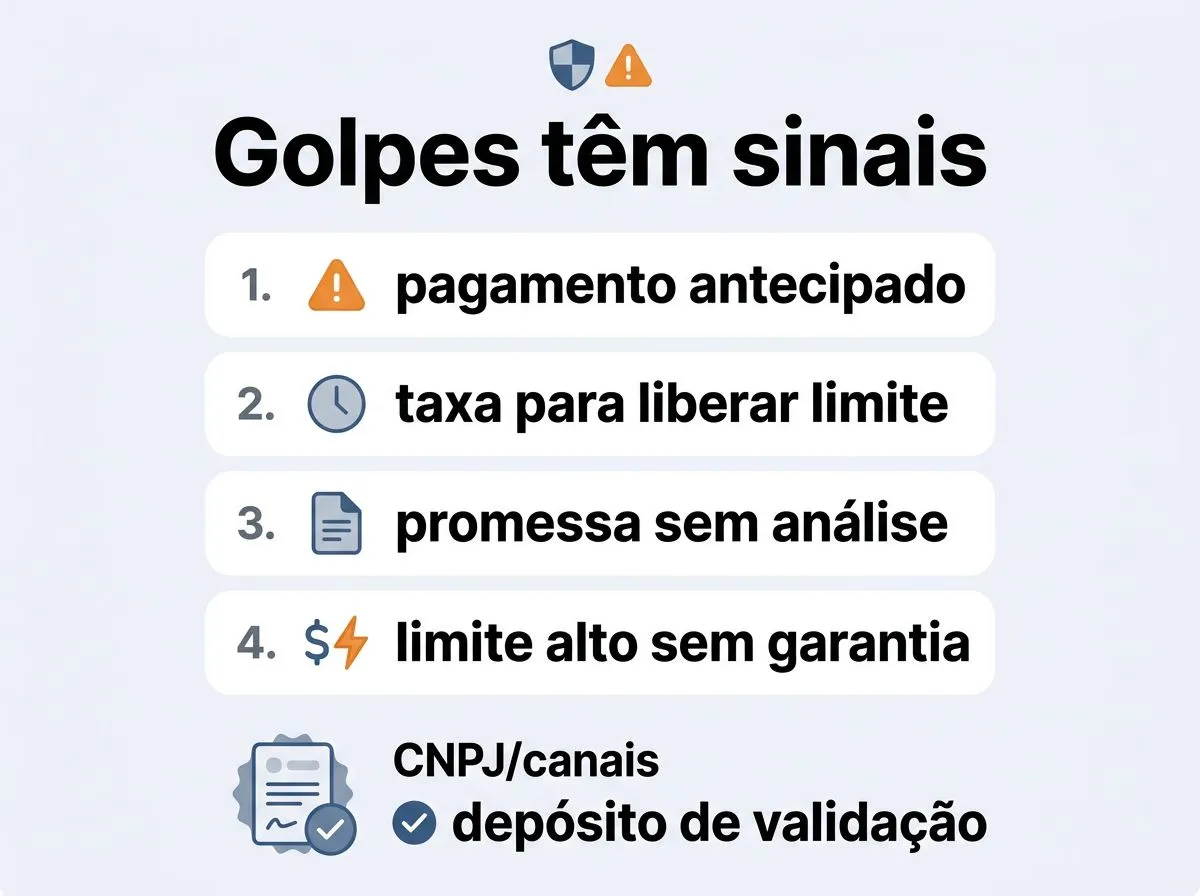
- be wary of requests for upfront payment or a fee to release the credit limit, because that is a classic sign of a financial scam
- be wary of promises of approval without an assessment or collateral, especially when the offer pressures you to act urgently
- confirm the company's CNPJ registration number and compare its name with the official channel to avoid fake profiles and makeshift intermediaries
- check whether the institution is authorized by the Central Bank of Brazil before sending personal information, documents, or any money
- only proceed if the terms are clear, with the cost, payment method, and contract accessible through an official channel
The most common scam starts with a request for a “release fee,” “insurance,” or “validation deposit” for a card that doesn’t actually exist. If the offer promises a high credit limit without reviewing your profile and pushes you to act immediately, treat that as a serious warning. Legitimate offers explain the cost, timeline, payment terms, and conditions of use before asking for any money.
To verify the company, look up its CNPJ and make sure the name matches the one shown on its official channel. This search can also help you tell a legitimate product from a profile borrowing someone else’s brand. Still unsure? Go back to the Central Bank of Brazil and confirm that the institution is authorized to offer that type of service. If it isn’t, stop there.
The application process offers another quick warning sign. If the offer tells you to leave the official app, pay by instant transfer, or send documents through an informal chat, the risk goes up sharply. Legitimate companies, including those cited in the market, generally keep the contract, fees, and support within an official environment, not on an unverified link or in a hurried message.
An app-based offer still requires a check in the official app store, such as Google Play, along with a review of the company’s legal identity. An app published by a third party, a name almost identical to a legitimate company’s, or a vague promise of fast approval should make you pause. Scams work best when the target feels rushed, so slowing down is one of your strongest defenses.
How to choose the least risky option for your situation
The best credit card for people with negative credit records is the one that works with your cash flow, not the one with the most appealing ad. If all you need is a controlled way to pay, a prepaid card will usually make more sense.
If you need a credit limit and can set money aside, a secured card is generally more useful. A payroll-deducted card may be the most predictable option for people who meet the requirements and accept a fixed deduction. It still demands discipline with the rest of the budget.
A sound decision starts with three direct questions: Does your CPF have an active negative mark, or have you already negotiated the debt? Is the institution authorized by the Central Bank of Brazil? Will the product’s cost cancel out the benefit of having a credit limit? Walk away if the offer requires an upfront payment, guarantees automatic approval, or keeps the contract hidden. For people with negative credit records, skipping the shortcut is often the least expensive way to stay protected.
Frequently asked questions
Can a prepaid card help rebuild credit?
It gives you a way to make payments, but it doesn’t rebuild credit like a card with an approved credit limit can. A prepaid card uses reloads, so it doesn’t create a bill or give you a credit limit borrowed from the bank. In practical terms, it works better for controlling spending than for building a payment history with the issuer.
Does a secured card guarantee automatic approval?
No. The security deposit lowers the institution’s risk and can make approval easier, but the issuer still checks your identity and conducts its own internal review. A bank might deny a traditional credit card and approve a secured card, but the outcome still depends on the issuer’s policy and the CPF holder’s recent profile.
Can I clear the negative mark before applying for a card?
Yes, negotiating or settling the debt usually helps, particularly when the negative mark is recent and still active. That said, the change won’t instantly erase the history already visible to the bank, and it doesn’t guarantee approval. The issuer can still reject the application under its own risk policy.
Can the bank deny me even if I have proof of income?
Yes. Income matters a great deal, but the bank also reviews recent payment history, monthly debt obligations, and other credit databases. That’s why the same person can get different decisions on two applications, even after submitting proof of income.