
What Is Freelance Work and How to Make Money Doing It
Freelance work means providing services on demand without a fixed employment relationship. It’s often the most practical way to sell your work by project, task, or short-term engagement. The term shows up everywhere in the marketplace, but its legal classification needs careful attention. Depending on the circumstances, the same service may be treated as independent contracting, a licensed profession, or a service provided by a business entity.
Key takeaways
- For freelance work, the scope must be finalized from the start, with deadlines and deliverables defined before the price.
- The contract should document the work, fee, revisions, and acceptance criteria, preferably before the work begins.
- How you get paid changes depending on whether you work as an individual, an MEI, or a business entity, and invoicing depends on your legal classification and type of activity.
- If there is a fixed routine, exclusivity, and employer control, the risk that the arrangement will be treated as an employment relationship increases, even if it is called freelance work.
What Is Freelance Work, and How Does It Differ From Independent Contracting, CLT Employment, and a Licensed Professional?
Freelance work is usually performed on commission, with a defined scope and payment connected to the deliverable or the agreed period. A signed employment record isn’t required, but basic organization still matters. Without a fixed employment relationship, you still need to agree on what will be done, when it will be delivered, and how payment will work.
In everyday speech, “freelancer” has become almost synonymous with someone who works independently on one-off projects. “Independent contractor” is a broader term because it covers any independent service arrangement, including ongoing work. “CLT” refers to an employment relationship with employer control, regularity, and structured compensation. A “licensed professional” practices a regulated profession and must follow the requirements of the relevant licensing board or professional rules.
The distinction matters because it affects the contract, billing, and tax documentation. A designer who delivers a visual identity in one week is working under a freelance model. That same designer could move into employment and contract-risk territory by serving the same company every day, exclusively, and on a fixed schedule, even if everyone’s emails still use the word “freelancer.”
Pablo Cavanagh’s public profile in the SEC Investment Adviser Public Disclosure database lists a period as a “freelance software developer/designer.” That example shows how the market uses the term to describe independent work, rather than as a fixed legal category.
In practice, keep one simple rule in mind: freelance describes how a service is provided. It doesn’t replace a contract or settle tax matters by itself. If you’re hiring, define the deliverables and risks clearly. If you’re providing the service, make sure you know how you’ll be paid and document the work properly instead of improvising later.
How to Hire, Formalize, and Organize Freelance Work Without Basic Mistakes
Start with the proposal. It clears up most potential confusion before the work begins. Spell out what you’ll deliver, what’s excluded, the deadline, and how many revision rounds are included. Keep the language direct, and avoid vague adjectives or promises that leave the door open to anything.
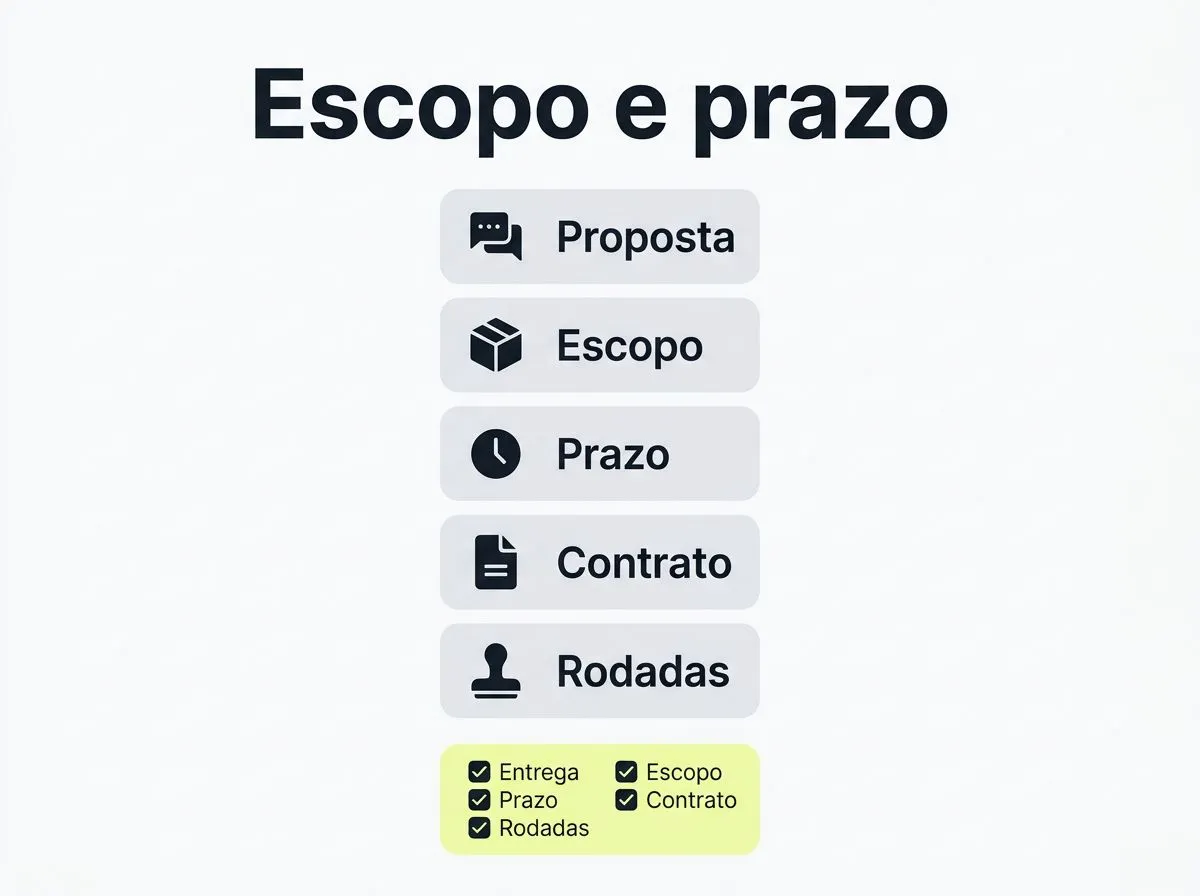
- List the main deliverable using a specific name, such as “a business website with up to five pages” or “1,200-word SEO articles.”
- Finalize the scope and deadline before discussing the price, because urgency and complexity affect the cost.
- Define how the client will approve, review, and request changes to prevent endless rework.
- Put everything in a service agreement and, if possible, sign it digitally so you have proof of what you agreed to.
The contract should match what you actually agreed to, not a polished-up version of the project. In freelance contracts, the clauses that prevent the most conflict cover scope, compensation, deadlines, revisions, acceptance criteria, and termination. The same basic structure works for writing, design, video, development, and consulting.
Market practice supports this structure. Material from Marcos Martins Advocacia emphasizes formalizing the scope, deadlines, and compensation. SignDocs Brasil also provides a template covering the parties’ information, scope, term, and fee. Those basics protect both sides when the work happens outside a traditional payroll arrangement.
Defining project milestones can save a lot of time. Rather than saying, “I’ll deliver everything at the end,” divide the work into stages and get partial approvals along the way. That gives you a chance to correct course early, prevents surprises at final delivery, and makes it less likely that the client will want to redesign the entire project after the deadline.
How to get paid, issue invoices, and understand the tax side of freelancing
| Service provider status | Whether you can issue an invoice | Typical classification | Tax consideration | When to confirm with an accountant or on the official portal |
|---|---|---|---|---|
| Individual without a business | Generally cannot issue a service invoice as a business; a receipt and tax withholding may apply, depending on the situation | Occasional self-employed work | Individual income tax, social security contributions, and any applicable withholding depend on the type of service and the client | When the client requires a specific tax document or there is uncertainty about withholding |
| MEI | May issue a service invoice, depending on the permitted business activity and the municipality | Individual Microentrepreneur | The annual revenue limit and permitted business activity must match the current rules | Confirm with the Receita Federal and the city government |
| Simples Nacional | May issue an invoice, provided the business is in good standing and the activity is eligible | Small business legal entity | The filing method, tax schedule, and rate depend on the activity and revenue | Confirm with an accountant and through the Federal Revenue Service portal |
| Licensed professional with their own registration | May issue an invoice when operating as a legal entity; as an individual, the situation is different | It depends on the structure used for the engagement | The licensing board, withholding requirements, and payment method may vary | Confirm with the professional licensing board and the Federal Revenue Service |
In practice, an invoice and a receipt aren’t the same thing, and that difference can change the client conversation. Service providers operating as legal entities generally need to issue an invoice. Individuals may follow a different documentation process, but that doesn’t erase their tax obligations or automatically satisfy the client’s requirements.
If you’re considering opening a MEI or switching to Simples Nacional, don’t start with the impulse to “pay less.” The first question is whether your activity qualifies under the rules. Contabilizei and other accounting industry guidance commonly explain that eligibility depends on the type of service and revenue. The Federal Revenue Service remains the reference for checking current rules and the correct formalization process.
When the client is a company, the practical question is straightforward: will it accept a receipt, or does it require an invoice? If an invoice is required, determine the tax structure before making the sale. Trying to sort it out afterward can delay payment, create classification errors, and hold up the project’s financial closeout.
How to price, define scope, and get paid for freelance work
- Choose a billing model: hourly, per deliverable, or a fixed package.
- Separate what is included from extras, such as additional meetings, rush work, travel, or briefing changes.
- Tie payment to project milestones or specific dates, not to vague promises.
- Consider complexity, a short deadline, and usage rights for the material when setting the price.
- Do not charge only for the visible execution time, because research, revisions, communication, and corrections also take hours.
A good price covers execution, risk, and the work of managing the project. If you charge only for production hours, you’re leaving out the invisible hours that come with freelance work: fixing a weak brief, attending alignment meetings, waiting for approval, and handling last-minute rework.
The client benefits from a clear scope, too. It becomes much easier to compare proposals without treating different tasks as if they were identical. A quote for a “landing page with copy, responsive design, and three rounds of revisions” isn’t competing with a “simple website.” Treating them as the same service only creates friction once the contract is signed.
A strong sales response can be short and specific: “I can deliver the project within ten business days, with two rounds of revisions, upon payment of 50% upfront when we sign and 50% upon final approval.” That’s more useful than talking about “flexibility” without defining the terms. Both sides know what to expect, and the agreement gives you a clear basis for billing.
A Organização Internacional do Trabalho trata o trabalho freelance como parte de um conjunto mais flexível de formas de contratação, cada uma com seus benefícios e desafios. Na prática, isso significa acesso a projetos e mais autonomia, mas também exige disciplina para preparar propostas, definir contratos, calcular preços e cuidar dos impostos. A liberdade comercial vem acompanhada de uma responsabilidade operacional maior.
Se você está começando esta semana, acerte o básico desde o início: prepare uma proposta de uma página e transforme-a em um contrato com escopo e prazo bem definidos. Confirme também se o pagamento será feito a você como pessoa física, por meio de MEI ou pelo Simples Nacional. Só depois defina o preço. Assim, o cliente sabe exatamente o que esperar, e o prestador reduz o retrabalho e o risco de discussões depois da entrega.
Frequently asked questions
Can a freelancer have a verbal contract, or does it always need to be in writing?
Um acordo verbal pode existir, mas vale colocar tudo no papel quando o prazo, o escopo e o pagamento forem relevantes. No trabalho freelance, isso ajuda a evitar dúvidas sobre o que foi entregue, quantas revisões estão incluídas e quando o pagamento deve ser feito. Para serviços maiores ou mais sensíveis, um contrato assinado oferece muito mais segurança para os dois lados.
Can a freelancer work for multiple clients at the same time?
Sim. Isso é comum no trabalho freelance, que geralmente é realizado por projeto, tarefa ou contrato de curta duração. O ponto de atenção é organizar a agenda, cumprir os termos combinados com cada cliente e evitar conflitos de interesse. Esse cuidado se torna ainda mais importante quando existem cláusulas de exclusividade, confidencialidade ou prazos que se sobrepõem.
Does someone who freelances have to open a CNPJ?
Não necessariamente. A necessidade de um CNPJ depende do volume de receita, das exigências do cliente e da forma como as notas fiscais são emitidas. Se o trabalho for recorrente, vale verificar com atenção se MEI, Simples Nacional ou a atuação como pessoa física é a opção mais adequada para o seu caso.
How can you avoid charging too little for freelance work?
A melhor forma de calcular o preço é considerar tudo o que o projeto realmente exige: tempo de execução, complexidade, revisões, urgência e direitos de uso. O texto também destaca que um escopo vago pode distorcer o valor do serviço. Por isso, deixe claro o que está incluído e o que será cobrado à parte, como revisões extras, deslocamentos ou reuniões adicionais.
Are freelance work and intermittent work the same thing?
Não. O trabalho freelance consiste na prestação de serviços sob demanda, sem uma relação de emprego fixa. Já o trabalho intermitente é uma modalidade específica de relação de emprego prevista na legislação trabalhista. A diferença prática está na estrutura do vínculo: o trabalho intermitente envolve uma relação formal de emprego, enquanto o freelance geralmente se baseia na contratação para uma entrega ou por um período previamente combinado.