
Total Effective Cost (CET): Understand the True Cost of Your Credit Card or Loan
Total Effective Cost, or CET, shows what a credit transaction really costs once interest and the fees included in the agreement are counted. It helps you compare credit cards, loans, and financing offers without getting stuck on the advertised rate alone. A payment can look smaller and still lead to a higher total cost.
Key takeaways
- Compare CETs only for offers with the same financed amount and the same term, because a different term changes the total amount paid.
- Check whether the CET includes IOF, fees, and insurance, since extra items can affect the offer more than the advertised rate.
- For credit cards, CET matters most with revolving balances and installment plans for the statement balance, where charges can build up quickly.
- For personal loans, the CET usually appears in the offer and contract, and it shows the true cost through the final payment.
This guide focuses on CET in consumer credit, not the term as it appears in other settings, such as European projects or public program acronyms. In financial terms, the idea is straightforward: CET reflects the debt's total cost, while the advertised rate usually shows only one part of the bill.
What CET is and what goes into the calculation
CET is the total effective cost of a credit transaction. In other words, it covers what you pay across the full agreement, not just the interest. In practice, it usually includes the interest rateIOF, fees, insurance, and other expenses connected to the contract. The exact items depend on how the offer is structured and what the institution is required to disclose to the consumer.
The Central Bank of Brazil's financial education materials present the total cost concept as a way to keep people from judging credit by the interest rate alone. The Central Bank's Financial Citizenship program explains that interest is only one piece of the price. The combined charges, loan term, and payment structure determine the real impact.
That can change the decision you make. A loan with a lower interest rate may cost more once you add an origination fee, loan insurance, tax, and a longer repayment term. Another offer with a slightly higher rate could have a lower total cost if it carries fewer extra charges and is paid off sooner.
CET is most helpful when you compare similar offers using the same financed amount and the same term. If one term is much longer than the other, the payment stops being a useful shortcut. A smaller installment can still lead to a higher final cost.
How CET should appear to consumers
CET should be easy to find in the offer, contract, and promotional materials. Without it, the comparison is incomplete. The practical rule is simple: when marketing shows only the payment or advertised rate and leaves the total cost out of sight, an important part of the decision is missing.
When you take out credit, check whether the rate is quoted monthly, annually, or on both bases. Mixing them up is a common mistake. Under compound interest, 2% per month is not the same as 24% per year, so comparing rates stated on different bases can send you toward the wrong offer.
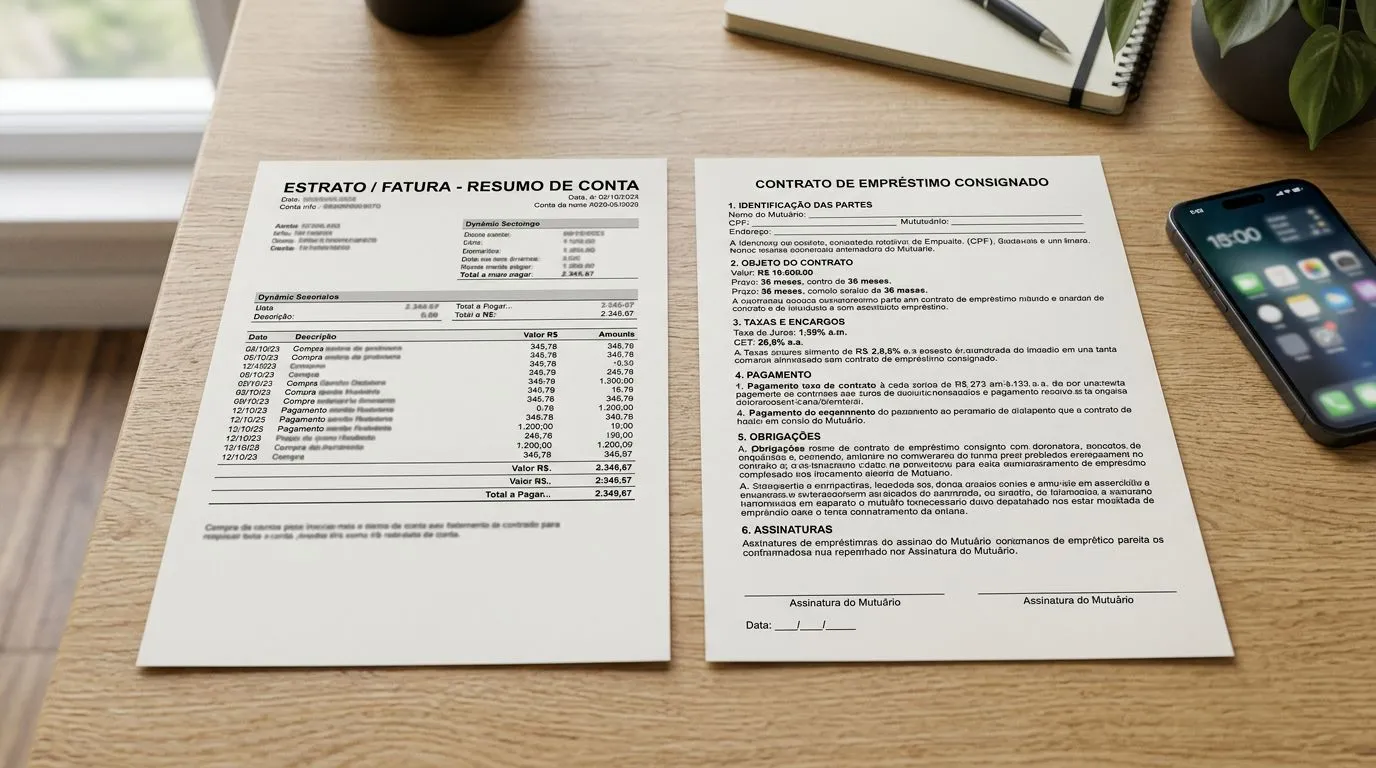
A CAIXA credit card statement, for example, shows how a monthly bill can include several separate components. You need to distinguish regular card purchases from financing charges and fees tied to late payments or installment plans. This matters even more with credit cards because costs can rise sharply once a balance moves into revolving credit.
An offer is not transparent if it promotes only “R$ X payment” while leaving out fees, required insurance, or the tax included in the transaction. When those items are not clearly listed, CET becomes a polished marketing figure rather than a useful way to compare what each institution actually charges.
CET for credit cards and loans: what changes in practice
| Type of credit | When the cost appears | Which charges matter most | How CET is typically shown | Risk of consumer confusion |
|---|---|---|---|---|
| Credit card | On the statement, in installment plans, during revolving credit, and after missed payments | Interest on statement financing, late-payment charges, IOF when applicable, and, in some transactions, fees and insurance | It usually appears in offers for revolving credit or installment plans, or in contract communications | Mistaking the minimum payment for the total cost and assuming that “paying in installments” always costs less |
| Personal loan | When the funds are disbursed and throughout the installment payments | Interest, IOF, an application fee, and any optional credit life insurance | It typically appears in the offer, the agreement, and loan estimates | Looking only at the payment amount and ignoring the total paid by the end |
For credit cards, CET matters most when you finance the statement balance. The debt can carry over from one month to the next, and charges can accumulate quickly. With a personal loan, CET lets you review the full package before signing, instead of comparing only the nominal interest rate and a short-term payment that happens to look affordable.
CAIXA and Cartão BNB show why the way you read the costs depends on the product. With a credit card, you need to understand the statement and the cost of the credit used. With a loan, you need to review the offer from beginning to end. The type of credit changes, but the basic logic does not: the real cost is everything charged under the agreement, not the one number designed to catch your eye.
How to interpret CET when comparing offers
- Compare CET only across offers with the same financed amount and the same term. If one offer changes the term, the number is no longer a straightforward comparison and you need to calculate the total amount paid.
- Check whether the CET includes fees, insurance, and IOF. When these costs are included in one offer but not the other, the comparison is skewed from the start.
- Confirm whether the rate is monthly or annual before using the number for comparison. Different time bases change the result and can make the payment look cheaper than it really is.
- Look at the total amount paid by the end of the loan, not just the monthly payment. A lower payment may result from a longer term, and a longer term usually increases the cumulative cost.
- Use the CET as your primary filter, but not as your only criterion when there are differences in flexibility, prepayment penalties, or renegotiation terms.
In practice, CET is a useful first filter. It helps separate genuinely comparable offers from those that only appear similar, and it pushes you to check what went into the calculation before choosing the payment with the lowest monthly amount.
Common mistakes when reading CET in credit offers
- Treating the nominal rate as the operation's final cost.
- Comparing CETs for different terms without adjusting for the amount and time period.
- Ignoring IOF, application fees, and credit life insurance.
- Assuming that a lower payment always means cheaper credit.
- Failing to check whether the stated CET matches the actual terms of the transaction.
Frequently asked questions
Are CET and the interest rate the same thing?
No. The interest rate accounts for only part of the cost. CET combines the transaction's total cost, including interest and charges connected to the contract, such as IOF, fees, and, in some cases, insurance. That means an offer with a lower interest rate can still cost more overall.
Can the CET change after the contract is signed?
Generally, no. The CET shown applies to the terms finalized in the contract. It may change if you take out new credit, renegotiate the debt, change the term, or make another adjustment that affects the charges. If none of those things happens, the figure in the offer remains the benchmark for comparison.
How can I tell whether the CET is monthly or annual?
You should find it in the offer, contract, or advertisement. The time basis matters a lot: comparing a monthly CET with an annual CET can completely skew the analysis. If the lender does not clearly identify the unit, the comparison is flawed from the beginning.
Does the lowest APR always mean the best option?
Not necessarily. The lowest APR generally suggests a lower total cost, but you still have to examine the loan term, monthly payment, and debt terms. A lower APR may come with a longer repayment period or less flexibility, and either one can change how the loan fits your budget.